Bring A Pen To Know What You Want

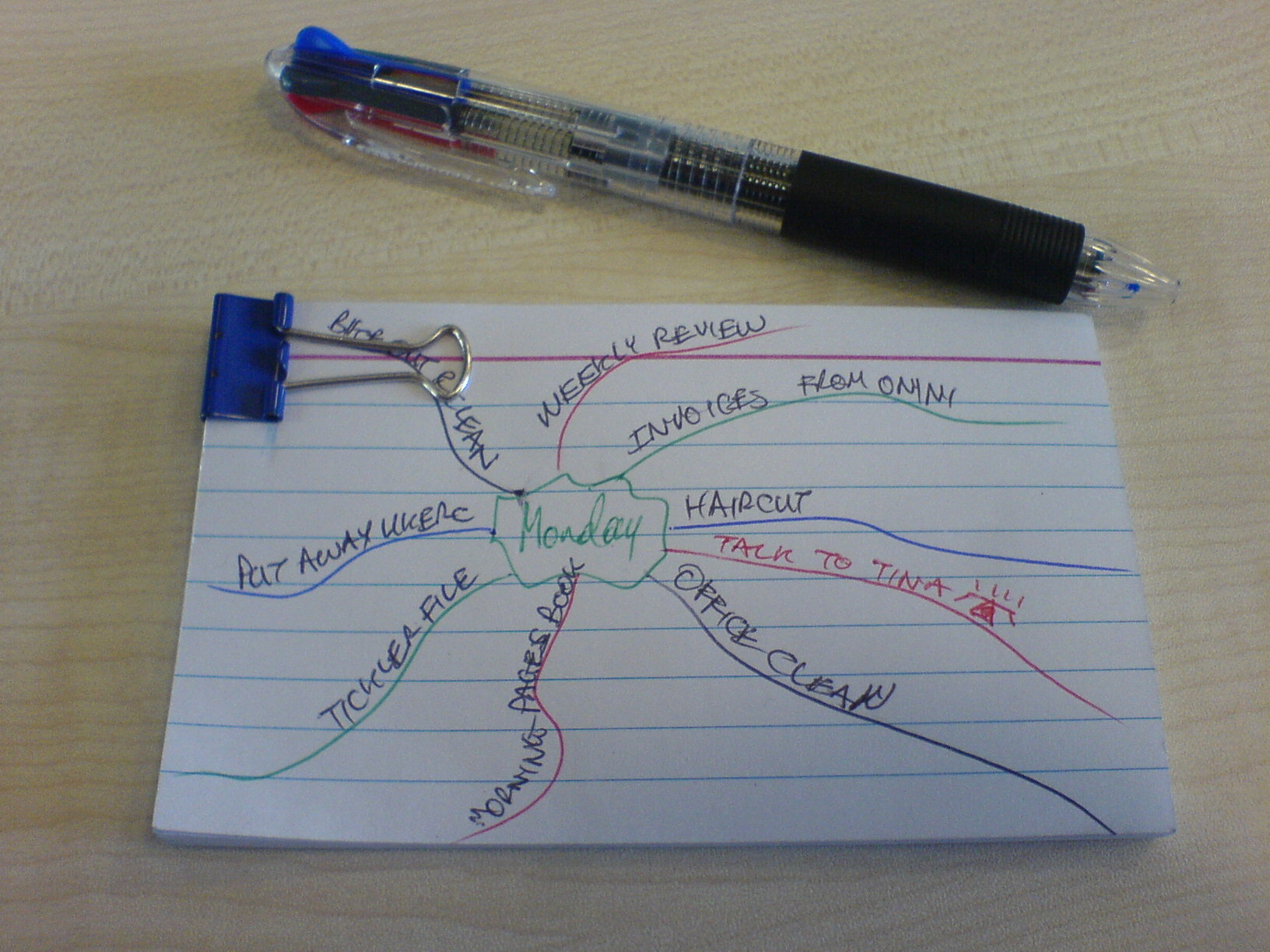
Hipster Mindmap

If you think it, capture it.


Yesterday, about 2pm, I sat down with a client who’d booked an initial advice session about starting her own business. She was articulate, well dressed, intelligent and had a great idea.

About 5 mins into our chat she looked up and said “Oh, do you have a pen I could borrow, and a piece of paper?”.

Yes, that’s right. This articulate, smart, intelligent client who was planning to start a business AND had booked this session over a week ago, had not thought to bring a pen or any other way to capture the value from our meeting. The ideas had started flowing, neurons were firing (about the only effect I ever have on women) and she had realised in that moment that she was in danger of losing some of this. Too late.

She’s not the only one. I once started a workshop with a roomful of people who all wanted to be consultants and again 5 mins in at least half of them were looking for a pen or asking for some paper.

We spent the next 15 mins or so talking about basic operating habits of a consultant, which include bringing a notepad to a meeting, together with some way of making a mark on it!

How is this relevant to knowing what you want?

If there is one habit that can really help you understand yourself, your own mind and what is nagging at your attention it’s the habit of ubiquitous capture.

One great habit that will help you to know what you want is the habit of capturing any thought that comes into your head so that you can do something useful with it.

Somebody once told me that your brain is for having ideas, not holding ideas; and that the best way to keep a clear head is shorten the distance between having a new thought and capturing it.

You cannot control what floats into your head. All sorts of things do and each time a wild idea floats in, your mind assigns it a place in your head and begins to track it. Then, when you are taking a shower or driving or otherwise distracted, these thoughts will ambush you. Why? Because you’re now tracking it with a micro part of your attention.

The only way to stop this is to create a management system for all that incoming stuff. And it starts with capture – either writing it down or preserving it in some other form.

That’s how I describe it in the book and here’s another way to think about it. You can only pay attention to 7 ± 2 things at once and as your conscious attention jumps around during the day, new ideas, insights, vague thoughts and reminders can easily get lost. I love the tag line on the Field Notes website “I’m not writing it down to remember it later, I’m writing it down to remember it now”.

Quite.

Want to develop the habit of knowing your own mind? Make a serious attempt to put a capture tool or device within your reach wherever you go. Including all those places were ideas come easily – outside the shower, in the toilet, in your car.

  • Put a wipe clean or blackboard in the kitchen
  • Find a small note book that goes with your wallet or handbag
  • Make yourself a Hipster PDA or several and put them everywhere

As David Allen says, leaving the house without your capture device should feel totally unnatural. You know you’ve cracked it when you feel naked without a pen and something to write on.

And once you have the tools in place, make a new habit of capturing every thought that comes to you. Capture wantonly and without judgement. Why?

Build this habit into your life and nothing will ever get past you. And your mind will stay clear so that you can continue to bring your full attention to whatever you are doing right now. You will become that rare person who is fully present.

You have taught your brain that the idea is safe (so it lets go) and also rewarded it for bringing you a new idea. Your brain likes this. Imagine your brain as a super intelligent person able to make astonishing leaps of insight but with the social skills of a six year old. It likes it when you take note of the ideas and suggestions it brings you. The more you do it, the more new ideas and suggestions will float up from your unconscious.

If you ignore it constantly or make promises you never keep then it will go off in a sulk. Pay attention, note the suggestions down, stick to your promises and you will unleash a flood of insight, ideas, suggestions and connections.

All you have to do to unleash this flood is make sure that wherever you go, you have a way of capturing an idea.

Read more about How Cat Food Can Help You Know What You Want in Part 8: Always Know What You Want:

Available everywhere but especially on Amazon


Order Now: Amazon.com

Order Now: Amazon.co.uk

Posted in More, Tools | Comments Off on Bring A Pen To Know What You Want

Seths Blog: Which of the four are getting the way?

Seths Blog: Which of the four are getting the way?.

As Seth points out, top of the list is “You don’t know what to do” a far wider problem than often credited.

You know that your life would change, if only you could work out what you really wanted to do…

Posted in More | Tagged , | Comments Off on Seths Blog: Which of the four are getting the way?

Reason 1: We Lack Practice

Stopwatch

Knowing what you want is a skill that takes practise

Why don’t we know what we want? Sometimes its simple. We just lack the practice, we have weak decision making muscles. If you’re an averagely nice person who never offends anyone, you probably just go with the flow. You generally get along with colleagues and friends. You don’t make a fuss because it’s easier not to and you probably look askance at people who do.

Because of this you are simply not used to deciding what you want and holding out for it. You rarely make that kind of decision. Your boss decides when you arrive at work and when you leave, how long your lunch should be and how much holiday you can have (and when). Your spouse organises your social life (and your socks). You fit in, watching the same TV, doing what others do. Even the way you dress or the kind of car you drive helps you to fit in and feel safe, not too different. Believe me, you lack practice in deciding what you want.

It’s no wonder, is it, that when it comes to the bigger issues in life we have no experience to fall back on. We’ve not practiced the skill enough to use it when we need it.
Hang on a minute though. I admit I might live on autopilot a bit but isn’t that just politeness? You can’t go around making a fuss about what you want the whole time, can you?

The Solution For Your Lack Of Practice

Let’s see. If we lack practice deciding what we want then the solution is pretty obvious. You have to practise. Think about a pianist doing scales or a footballer rehearsing moves. You have to go right back to the beginning, to the smallest parts of your life and practise deciding what you want. We’ll talk more about how to set up this practice later but why? Why is this so important?

All Those Broken Agreements Mean You’ve Lost Faith In Yourself

This lack of practice in making your own decisions gets compounded because you have been let down so many times. Imagine a friend of yours who keeps promising to meet you for lunch but never shows and worse, keeps coming up with the most lame excuses that you can hardly believe. My back was aching today, The cat was sick so I couldn’t come, I got distracted by this TV programme and before I knew it the time had gone. How would you feel about this person? Annoyed? Let down? That they weren’t a real friend?

Guess who you have been letting down? That’s right. Imagine a life littered with broken promises, full of intentions that never went anywhere and ideas that never got further than fantasy. Imagine that lot hanging round your neck. No wonder you feel confused. You’re feeling let down and probably slightly angry.

Lack of practice has deprived you of the skill of knowing what you want.

We’ll look at the second reason in a future post.

Available everywhere but especially on Amazon

Order Now: Amazon.com

Order Now: Amazon.co.uk

Posted in Book Extracts | Comments Off on Reason 1: We Lack Practice

How Cut and Paste Can Help Your Writing

My favourite part of any authors website is when they talk about their tools and writing process, so I hope you’ll forgive the occasional post here about how I made the book.

How to solve a word problem

Sometimes the old ways are best

One day in 2010…

So there I was, sitting in my hut, staring at the screen on my 15″ MBP and going nowhere.

There were too many words. And lots of them were in the wrong place. Worse, I couldn’t see them all at once and as every wise parent knows, when you can’t see them all, trouble is not far away.

I’d been shoving them around in Scrivener all morning. I knew I had to kill some of them but I’d grown fond of them all. My screen was just not big enough.

Sometimes the old ways are the best. I printed them, on paper no less, and began to cut. Then ably assisted by sellotape, pritt stick and staples I had pasted together a new version. For you youngsters, this is the way it used to be done.

Half an hour later I had the whole thing stitched together and ready to go. Then it was just a case of copying and pasting on screen to match.

This happened to me a couple of times while I was writing. And my lesson for today? Either get yourself a bigger monitor or do it the old way. I recommend it if you are stuck.

Posted in Tools, Writing | Tagged , | 1 Comment

What’s Inside?

A desert road in Arches National Park, Moab Utah.

First, Know What You Want...

95% of people do not know what they want and nearly all of them wish they did…

First, Know What You Want is a hard hitting guide to knowing your own mind and finding your inner compass. If you’ve ever dreamed of changing your life (if only you could work out what you really wanted) then this is the guide for you. This is not just a book about getting. It’s a book about being. Being able to discover a more authentic and joyful way to live a life you can look back on and say, “that was just how I wanted it.”

Inside you will discover…

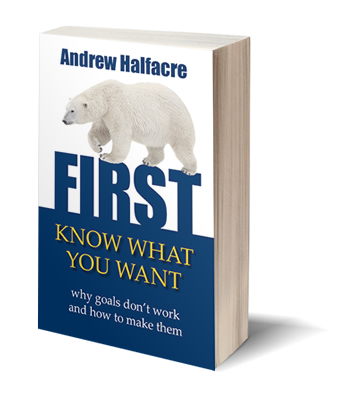
  • How a polar bear can help you know what you want
  • Why ‘goal setting’ often fails and what to do about it
  • How to use what you don’t want to get what you do want
  • How to distinguish fantasy from dreams that can come true
  • How to untangle what you want from how you feel
  • How to become a faster, better decision maker
  • The second most powerful question in the world
  • How to develop new and original ways of thinking
  • How to avoid self-sabotage and discouragement
  • How to uncover the values that drive you
  • The incredible benefits of starting small
  • How to be happier right now
  • What to do when you are stumped
  • How your senses can tell you what you want

Order Now: Amazon.com

Order Now: Amazon.co.uk

Posted in Book Extracts | Comments Off on What’s Inside?

Available Now on Amazon

Coming soon...

Amazon Links are up and the book is available to order now

Amazon.co.uk

First, Know What You Want

Amazon.com

First, Know What You Want

Posted in Progress update | Comments Off on Available Now on Amazon

Hashtag, join the discussion

Or, Boy This Twitter Stuff Is Confusing!

Like an elderly man negotiating the tricky waters of a supermarket self service checkout, I’m groping my way towards using Twitter. Retweets, direct messages, who to have in my timeline – all strange for a newbie. And I’m late to the game.

This, though, is a great idea. So here is the #htagbooks for this one – #firstknow. Use it wantonly. Hope you’ll join the discussion soon.

You should follow me on Twitter @first_know. See you there.

Posted in Progress update | Comments Off on Hashtag, join the discussion

Extra: How To Find Your Mission In Life

Man on mountaintop

Keeping it going

The best thing I’ve ever read about finding your mission in life was something I stumbled across while flicking through the appendix at the end of What Color Is Your Parachute? Parachute is a great manual for Job Hunters and Career Changers but tucked away in the back Richard Bolles has added his essay on solving the ultimate mystery – what is my mission in life?

One of my decisions with the book was whether to include anything about mission or meaning or ultimate purpose in a practical guide to knowing what you really want. In the end I decided not to, partly because Dick Bolles essay is so good but more because my experience as a coach is that most people I ask can’t even tell me what they want in the next 60 mins. To ask most people about their mission in life or even send them down that track is like shouting in Esperanto at your deaf Auntie. There is just no chance of any effective communication, not a shred.

In many ways we can only approach our mission in life or perhaps it’s wider meaning, backwards. Only when we are good at working out what we want the next hour to mean can we move onto to giving our day a meaning. And perhaps only then turn our thoughts towards the bigger picture. I’m not a believer in the top down approach, it’s impractical to ask people to define their mission and purpose if they struggle to agree an agenda before a meeting. Meaning and purpose for most of us is something we grope towards by working it out in practice. So I left it out of the book but I did want to return to it here, maybe as extra content for those who want to go a bit deeper. So here’s a summary of the essay in Parachute followed by a link and PDF copy.

For Dick Bolles, your mission in life has three distinct parts. He takes a robustly Christian approach but writes and explains it so skilfully that people of all faiths and no faith will also find it useful. I’m paraphrasing badly here but he suggests that…

  • Your first mission in life is to pursue a relationship with the one who calls you. Mission implies both calling and vocation, two synonyms which presuppose someone who calls. It’s not something you decide to do because you fancy it, treating your mission as a purely personal pursuit makes no sense. In a very real sense it is something we are called to. The first job is our continuing mission to know the one who calls.
  • Your second mission is to join everybody else in creating heaven on earth. Each day, all day we make straightforward choices between creating more of heaven or less of heaven, choices we make while driving, talking to others, living with our families etc. In a very real sense we are slowly becoming more of a beauty or more of a beast. This is a big mission, which we can only pull off together, but understanding it helps with hundreds of minor daily decisions – simply put, will what I’m about to do create more or less of heaven on earth?
  • Your third mission is to understand the unique role that only you can play and it’s here that Bolles is the most helpful with those bigger decisions we face about what we want and what we should do. He argues that God has left us strong clues in the shape of what we love to do and what we are good at. Getting a very clear understanding of your passions and strengths is a major indicator of where you are supposed to spend your time and energy.

When I’m tempted to shout Esperanto at my Auntie (start asking clients about their mission in life) this three part structure is a good reminder to bring it down to a practical discussion of strengths and passions. And if you’re wondering about your mission in life then that is not a bad place to start.

It’s a great essay. You can read the whole thing online. And here’s a PDF to keep.

Posted in More | Tagged | Comments Off on Extra: How To Find Your Mission In Life

Nearly there…

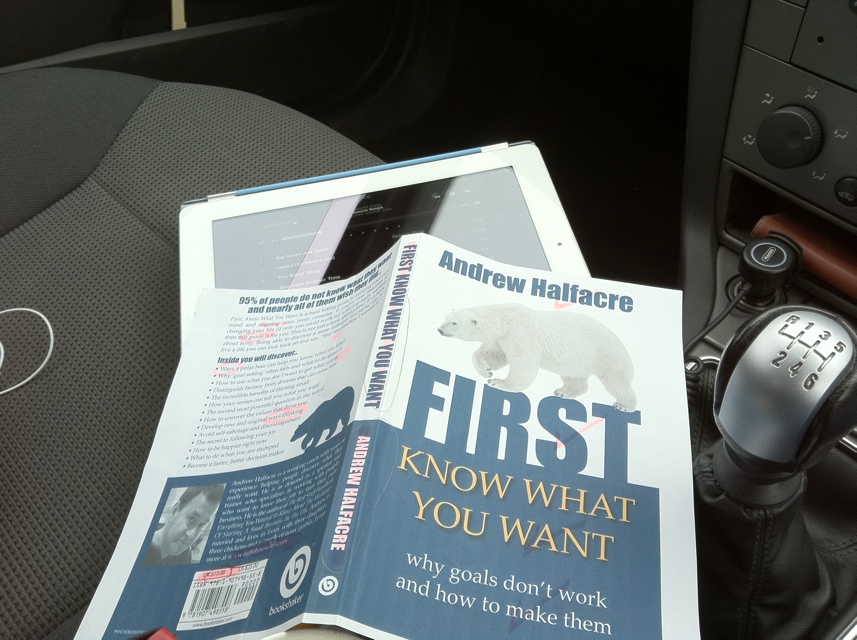
See the glamourous life of a nearly published author. Sitting in the car while the kids are swimming, listening to Seasick Steve and proofing the book jacket.

20110517-071734.jpg

Posted in News, Progress update, Writing | Tagged | Comments Off on Nearly there…

Who’s Driving Your Bus?

Who's Driving Your Bus?

Are you a driver or a passenger?

In the end, it always comes down to this – who is driving your bus? I met a researcher the other day who told me that the most common characteristic of successful people is that they are ‘goal-directed’, in other words in any given situation they will look for what to do next and do it. You can only do this if at least some part of you believes that you can influence your own situation or, in my language, if you are a Driver.

People who think like a Driver find it much easier to get to know what they want and they also find it easier to discover the motivation to go and get it, once they have figured it out. Passengers, on the whole, don’t.

Passengers:

  • take little responsibility for results.
  • act as if they’re a victim of circumstance.
  • believe they have no choice over the behaviour they are exhibiting right now.
  • may blame their history.
  • may blame others, they say things like, They made me.
  • may blame their ancestors – It’s bad karma.
  • may use a scientific excuse – I have a gene that makes me rude.
  • view life as fixed and their results as inevitable.
  • take comfort from knowing that since they have so little influence they cannot be blamed for their results.
  • coming to a training event or business meeting will blame the room, the trainer or the other people or even fate/karma for their experience.
  • can often be found asking themselves, Why is this happening?
  • will rehearse reasons (excuses) why things did not happen. Reasons will dominate their conversation.

You see the passenger mentality in a man or woman who takes the role of victim in their life. The core belief is that they have no choice. To be a good passenger you must constantly deny two things:

  • your own role in creating your circumstances.
  • your own power to change your circumstances.

Drivers:

  • take full responsibility for the results they see in their lives.
  • are able to choose their emotional reaction to events and circumstances.
  • believe they always have a choice so they are able to generate lots of new options for themselves.
  • are willing to face the discomfort of owning up to their own role in creating situations.
  • understand that any outside force in their lives is only influential insofar as they let it influence their next choice.
  • understand that another person (boss, etc.) is only an influence in their life insofar as they let them.
  • coming to a training event or business meeting know that no matter how bad or how good things get, they can always get the result they want. Why? Because they are responsible for getting it and they know that with enough flexibility they can get anything.
  • will frequently ask themselves, How can I make a change to change this situation?
  • will use tend to use results based language. You won’t hear excuses from them. Drivers will talk about where they are going and what they are doing – the results they want.

To be an effective driver you must:

  • act as if your choices create your circumstances – whatever they are.
  • act as if you have the power to change your situa- tion by making different choices.

On the whole it’s easier to know what you want if you operate as a Driver rather than a Passenger.

A World Full Of Passengers

Many of us are quite happy to sit back in the passenger seat while someone else drives the bus – parents, partners, colleagues, our boss, the government. Every so often we may look out of the window and wistfully imagine going somewhere else, but we pretty much act as passengers in our own life.

The exercises in Part Four will help you to begin to figure it out and, just as important, are a set of tools you can use to help others figure it out too.
And if you want to make this work for you then start by making a commitment to yourself that you will hop into the driver’s seat of your bus and take responsibility for where it goes.

Of course, it’s easy for me to write this. How do you actually start driving your bus – especially if you’ve been a passenger for a while?

The Easy Way To Become A Driver

Take a good look at your life – weight, finances, relation- ships, job, business , etc., and ask yourself, What is my role in creating this?

Because, after all, if you are going to drive your bus then you need to act as if you created it all.

For all the stuff you like and want more of, ask yourself, How can I create more of this?
For all the stuff you don’t like and want less of, ask your- self, How can I create something different?

What Is Your Role In Creating This?

Now act. Do more of the things that will create what you want. Stop or do less of the things that create the results you don’t like. The moment you feel yourself going passive, ceding control of your results to parents, partners, colleagues, bosses or even political institutions, then go right back to the beginning: What is my role in creating this?

I don’t know whether we do create all the results in our lives but I do know that by acting as if we do, we greatly increase our ability to change all our results. Perhaps the best guidance of all comes from St Augustine: Pray as if it all depended on God and work as if it all depended on you.

Do your bit with everything you’ve got, let the rest go, and it becomes much easier to know where you want to go. Just as if you were driving your own bus.

Posted in Book Extracts | 1 Comment